A child-led, hands-on early childhood education program inspired by Montessori and Reggio Emilia, helping young learners step into school confident, curious, and ready to thrive.
Inspired by the Montessori and Reggio Emilia approaches, our curriculum is built around one clear goal: children who arrive at kindergarten ready to learn, connect, and thrive.
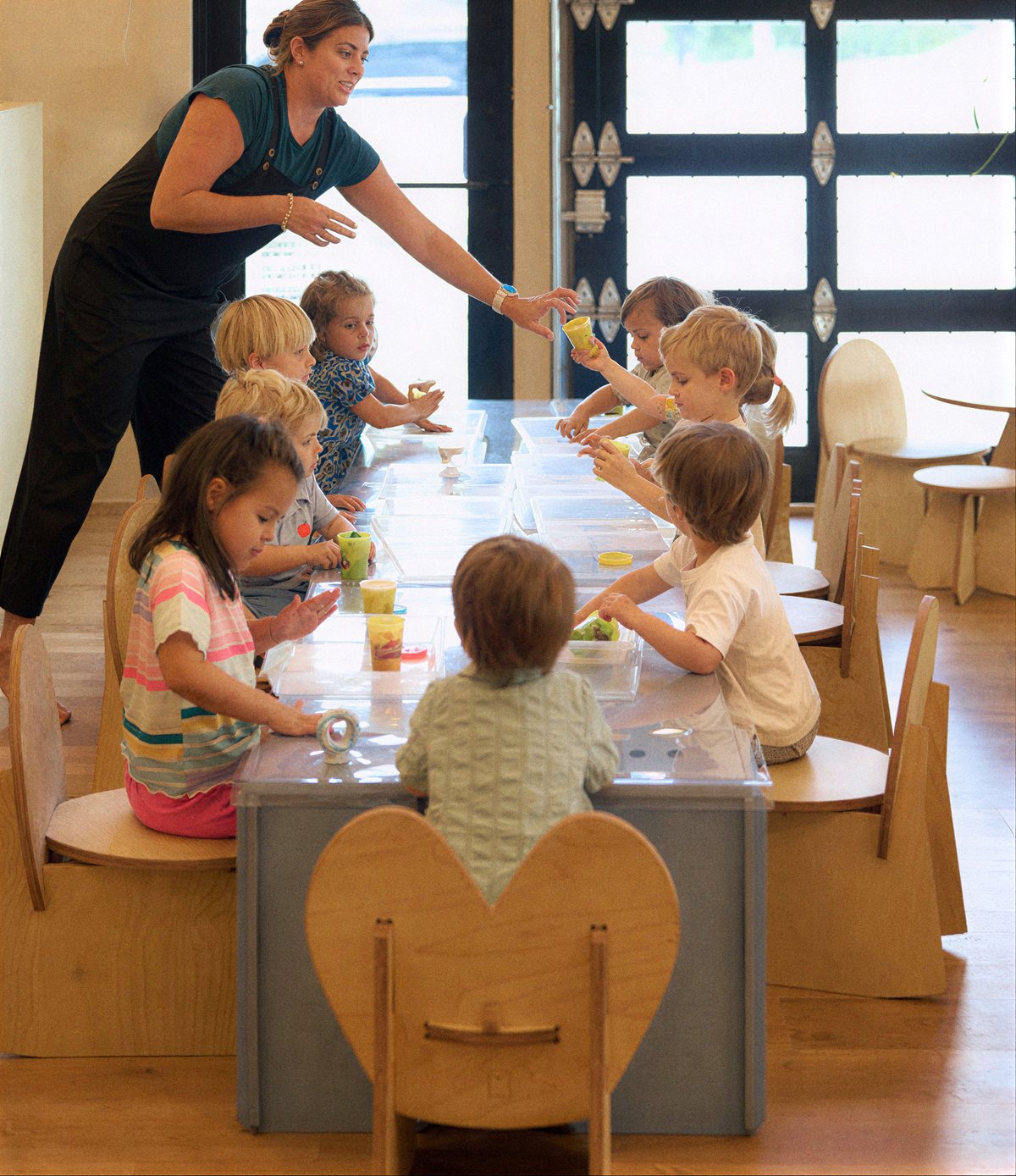
From Montessori, we draw our commitment to independence and self-paced learning. Our classroom is a thoughtfully prepared environment filled with hands-on materials, where children choose their work, explore at their own pace, and build real-life skills they can proudly do themselves.
From Reggio Emilia, we draw our belief that children have many ways to express what they know. Through art, building, storytelling, music, and collaborative projects that grow from their own interests, children learn to share ideas, listen to one another, and solve problems together, while our teachers observe, guide, and document their growth.
We work backwards from South Carolina kindergarten standards, with a focus on early literacy and math, to prepare children socio-emotionally and academically for their next big step.
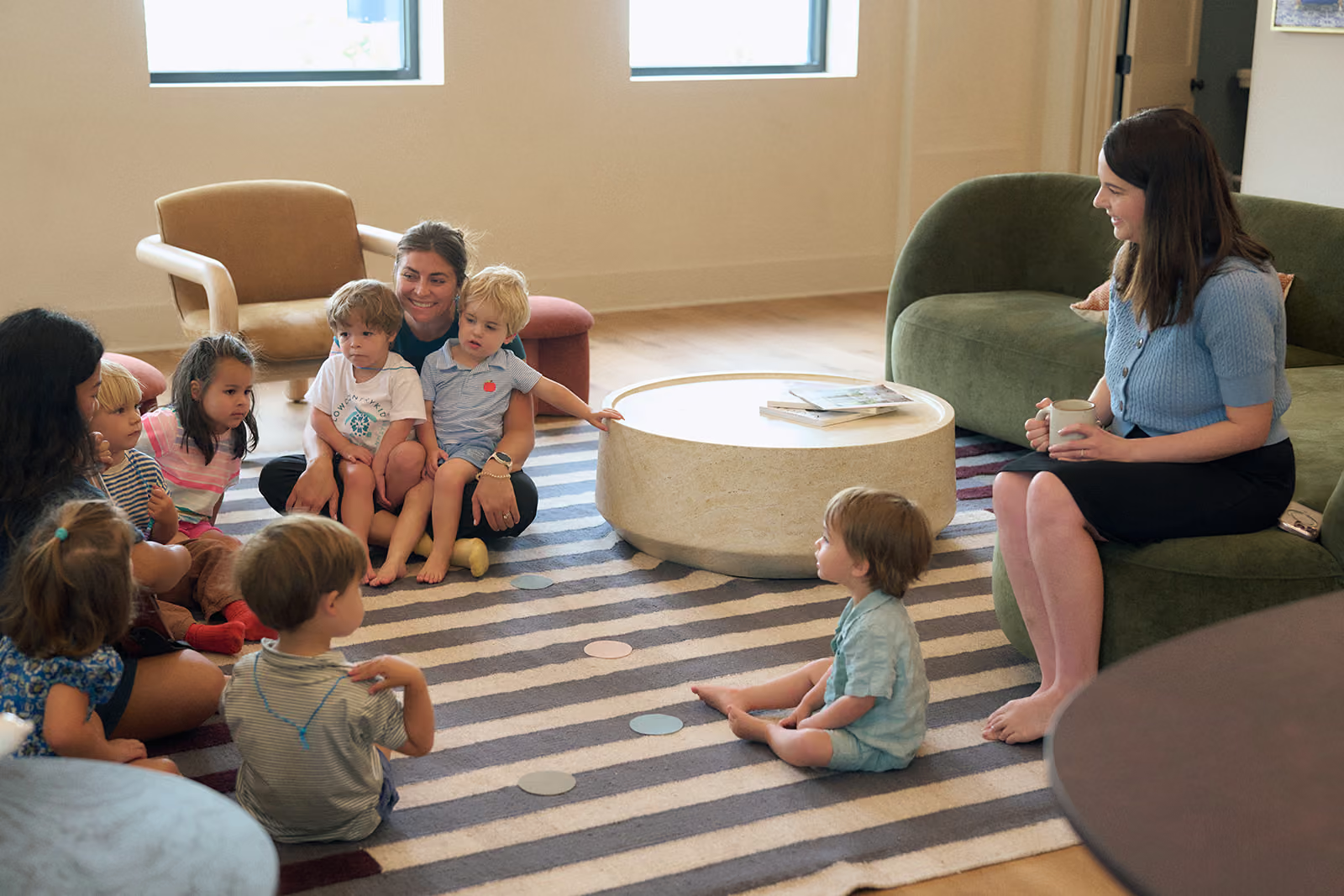
Each morning balances focused learning with movement, music, and stories. Here is what a typical day looks like.
Every day at Kinry Academy moves through six learning areas, each designed to grow a different part of how young children think, move, create, and connect.
Children build vocabulary and early literacy skills through natural exposure: modeling, sound repetition, and connecting words to real objects and experiences.
Children explore numbers with their hands and imagination. Beautifully arranged, hands-on materials invite them to count, sort, measure, and spot patterns at their own pace. Math comes to life through play and everyday moments.
Hands-on activities stimulate touch, sight, sound, and smell, helping children make sense of their experiences, refine attention and focus, and develop sensory processing skills.
Open-ended, self-paced physical exploration strengthens gross and fine motor skills. Children practice coordination, body awareness, and early risk assessment through balance, navigating obstacles, and gauging their own capabilities.
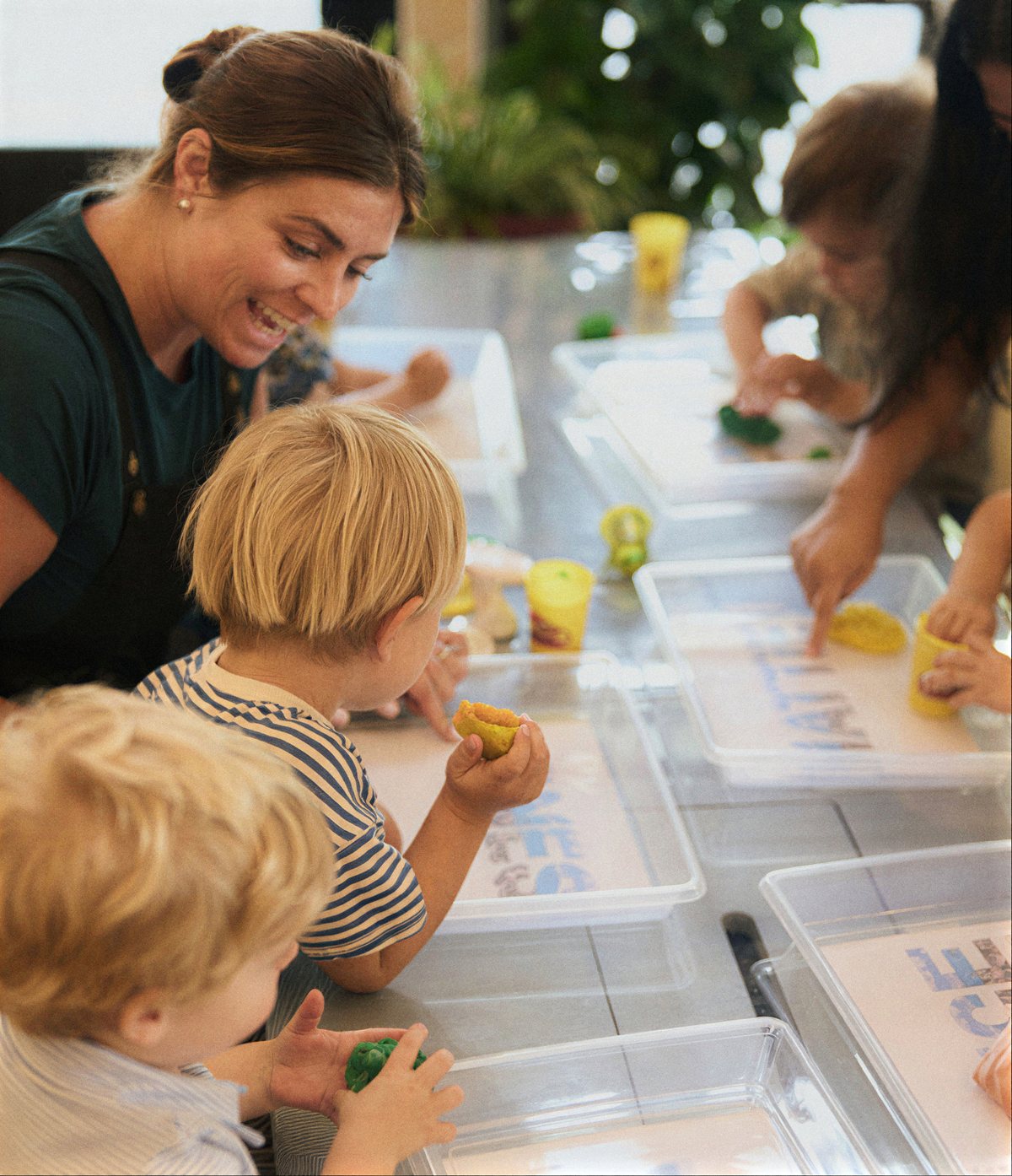
Children experiment with color, texture, and form using a variety of materials, discovering their own ideas and creative process rather than focusing on a fixed product.
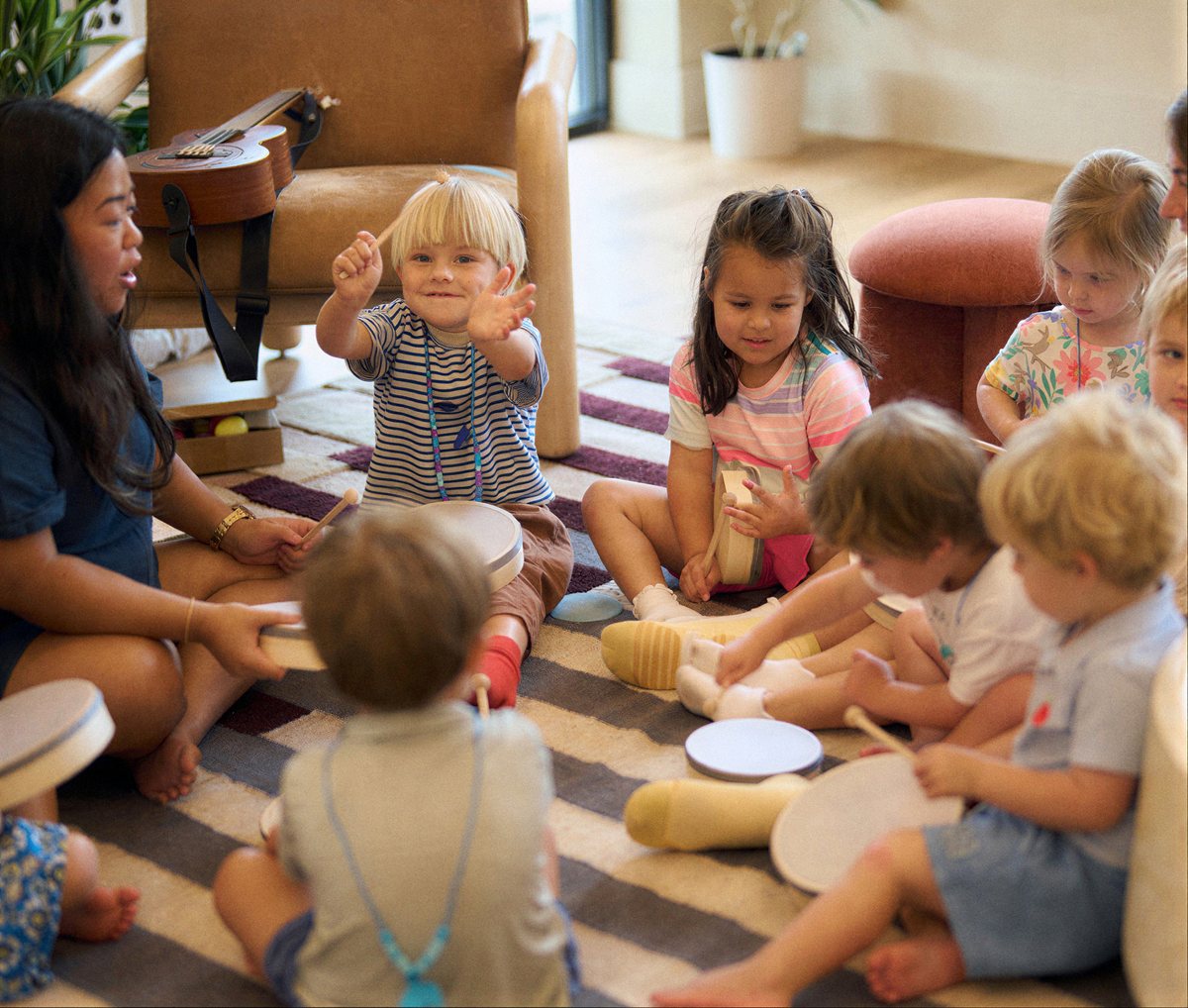
Group musical activities support listening skills and build a sense of community. Shared reading sparks imagination, builds on literacy skills, and helps children make connections through storytelling.
Early Numeracy and Early Literacy are taught in eight units that build on each other through the year. Tap a unit to see what children work on and the materials they use.
Growth indicators: Build and play with a variety of materials. Begin to use and understand positional and descriptive language, moving objects in different ways and describing where they are.
Materials: Magna-Tiles, trains and tracks, foam blocks, Duplo blocks
SC standards*: K.MGSR.1.2, K.MGSR.2.2
Growth indicators: Name and recognize 2D shapes, and create shapes using a variety of materials.
Materials: Plastic geometric block shapes, Magna-Tiles, paper and crayons
SC standards*: K.MGSR.2.1
Growth indicators: Count to and recognize numbers 1 to 10, and engage in counting conversations during play.
Materials: Counting games and activities, blocks, toy animals
SC standards*: K.NR.2.2, K.NR.2.3
Growth indicators: Sort objects into two groups by shape, color, size, or type (animals, food, and more), and identify and explain which objects don't belong.
Materials: Sorting animals, toy foods
SC standards*: K.DPSR.1.1
Growth indicators: Show an emerging understanding of patterns (ABAB) while building and playing.
Materials: Colored blocks, Duplo blocks
SC standards*: K.PAFR.2.1
Growth indicators: Name and recognize 2D and 3D shapes, and create shapes using a variety of materials with teacher support.
Materials: Plastic geometric block shapes, Magna-Tiles, 3D foam shapes, paper and crayons
SC standards*: K.MGSR.2.1
Growth indicators: Count to and recognize numbers 1 to 10, begin to understand counting within sets (like the number of animals or blocks in a group), and count during play.
Materials: Counting games and activities, blocks, toy animals
SC standards*: K.NR.2.2, K.NR.2.3
Growth indicators: Show off counting, shapes, and sorting skills in a variety of table and play-based settings.
Materials: Free play toys, Duplo blocks, plastic geometric block shapes, 3D foam shapes
SC standards*: K.NR.2.2, K.NR.2.3, K.MGSR.2.1
Growth indicators: Use fingers to hold a crayon and put it on paper, play with playdough, and use fine motor skills to play with toys.
Materials: Paper and crayons, playdough
Growth indicators: Sit and engage with a story read aloud, show understanding of teacher questions about the story, and use paper and writing tools to show their thinking about it.
Materials: Fairytale storybooks, paper and crayons, puppets
SC standards*: ELA.K.AOR.1.1, ELA.K.AOR.7.1
Growth indicators: Listen and engage with factual books, music, and information about farm animals, and use paper and writing tools to show their understanding.
Materials: Books about farm animals, farm animal toys, paper and crayons
SC standards*: ELA.AOR.6
Growth indicators: Listen and engage with factual books, music, and information about sea creatures, and use paper and writing tools to show their understanding.
Materials: Books about sea creatures, paper and crayons
SC standards*: ELA.AOR.6, ELA.AOR.7
Growth indicators: Hold a crayon with their fingers and build elbow strength, play with playdough, and use paper and a writing tool to share their thoughts.
Materials: Paper and crayons, playdough, various toys
Growth indicators: Engage with a story read aloud, show understanding of teacher questions about the story, and use paper and writing tools to show their thinking about it.
Materials: Fairytale storybooks, paper and crayons, puppets
SC standards*: ELA.K.AOR.1.1, ELA.K.AOR.7.1
Growth indicators: Begin to sing along with the ABC song and recognize the beginning letter of their name.
Materials: ABC games and activities, ABC blocks, paper and crayons
Growth indicators: Begin to recognize and write the letters in their name.
Materials: Whiteboards, dry erase markers, paper and crayons
*South Carolina State Standards listed are goals for the end of kindergarten. Our focus is to lay the foundation for these goals and use age-appropriate indicators for growth.
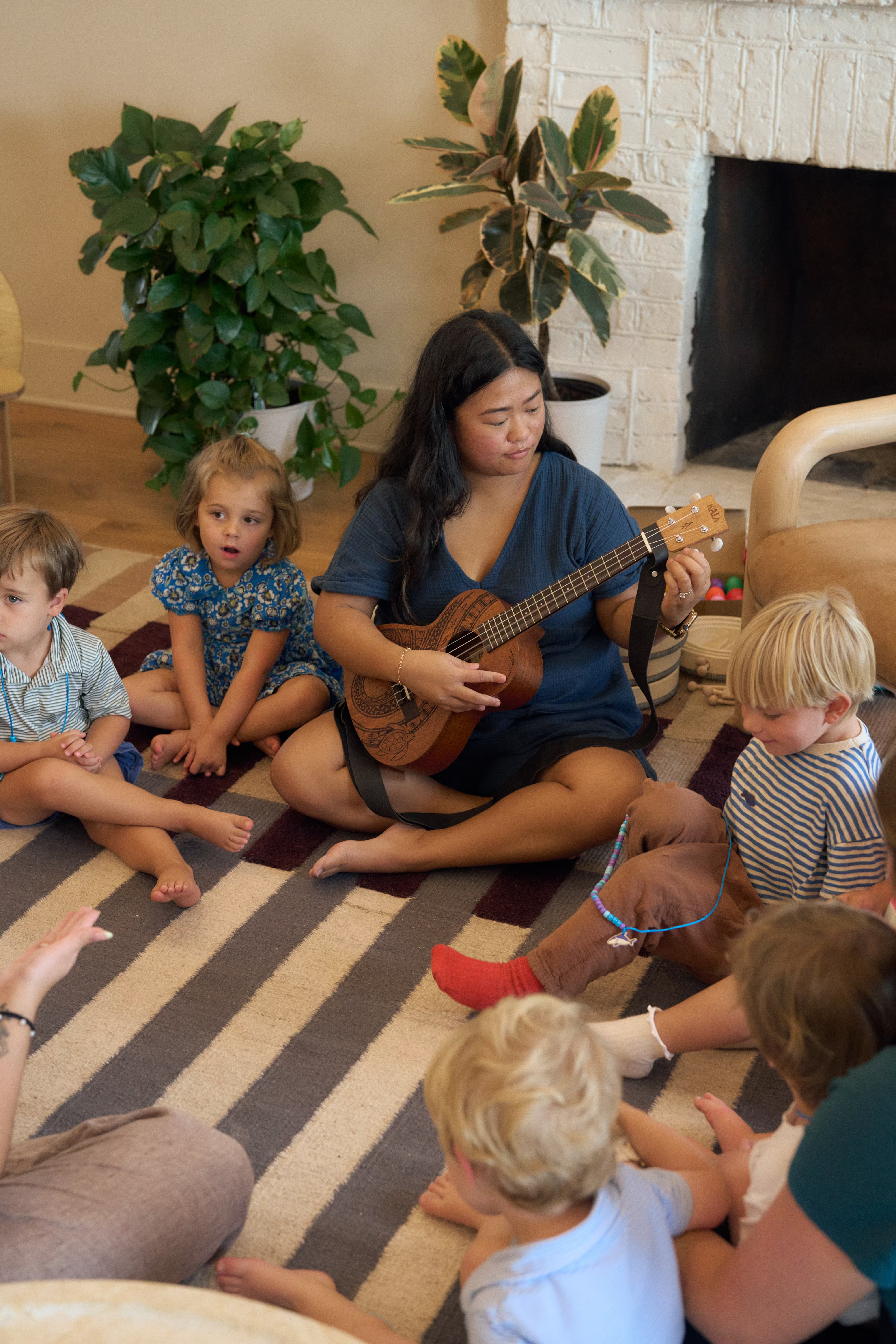
When building our teams, we prioritize working with teachers and staff who reinforce and cultivate a warm, welcoming and open-minded environment within our community. We look for educators with a range of backgrounds in early childhood education and experience but, more importantly, we value teachers who are aligned in our teaching philosophies, believe in play-based learning, value our curricular approach, and are collaborative and passionate about working in education. We firmly believe that our teaching teams are educators as well as caregivers and that teachers of birth through 5 programs have a fundamental role in a child’s development. Our teachers follow positive reinforcement with respect to social and emotional skills and utilize coaching and modeling strategies, not punitive tools, when working with children on behavioral development.
Hi, I'm Kali! I hold a bachelor's degree in Early Childhood Education, with concentrations in American Sign Language and Human Development and Family Studies. As the daughter of a diplomat, I grew up mainly in Ireland and also lived in South Korea, Israel, and Canada. Two years ago, my husband and I moved to South Carolina, and becoming a mom to my son showed me just how valuable a strong early education is. I began my teaching journey at a Reggio Emilia-style childcare center in college, then spent six wonderful years as a kindergarten teacher.
I believe a teacher's first responsibility is to lay a foundation of safety and respect. When children feel secure and valued, they are free to grow and flourish. To me, respect means recognizing that children are capable of expressing their own interests, and that each child has a unique way of communicating. My role is to help them discover their voice and support them as they grow. Children are naturally curious, and I see it as my job to nurture that curiosity and create an environment where they can freely explore and express it. Play is at the heart of how young learners grow, and through it, they build early literacy and math skills while discovering a lifelong love of learning.
Hi, I'm Lilynn! I earned my undergraduate degree in Psychology from Rutgers University and am currently pursuing a master's degree in Clinical Mental Health Counseling, with a specialization in Children and Adolescents, at Northwestern University. Creativity is at the heart of who I am, and I try to bring it into everything I do, from designing hands-on activities to creating warm, inviting spaces where children love to learn. Outside the classroom, you'll find me painting, taking photographs, making coffee, working on a puzzle, or curled up with a good book.
I believe young learners are remarkably capable, and that they flourish when they are given the right environment to show it. My role is to thoughtfully create that space: one where curiosity is welcomed, independence is nurtured, and every child feels safe, seen, and valued. My background in psychology, along with my graduate studies in clinical mental health counseling with a specialization in children and adolescents, deeply informs my approach. I hold great care for each child's emotional well-being, understanding that a strong sense of security and self-worth is the foundation for meaningful learning. Above all, my goal is to support the growing young mind with patience and warmth, and to help each child grow into who they truly are, with the confidence to embrace it.
Community is core to the Kinry program and underscores the importance of the relationship between families and their child’s school. Kinry organizes a variety of activities, engagement and events to connect with parents as part of the school community. Examples of this include schoolwide exhibitions to showcase children’s work, family days to celebrate as a school, open houses to invite parents to meet teams and tour classrooms, and various other events throughout the year. Kinry also embraces technology to foster a transparent and inclusive environment within our community. The combination of the schoolwide events and experiences with the day-to-day interactions strengthens our relationship with families and allows us to make children’s learning more visible to families.


Kinry Academy is designed for young learners preparing for kindergarten. Include your child's date of birth on the application and our team will confirm the right fit.
Mornings run from 9:00 AM to 12:00 PM and include group play, early math, movement, music and dance, a snack break, storytime, early literacy, and a closing circle.
Kinry Academy is a structured, curriculum-based program focused on kindergarten readiness, with units in early literacy and math that build through the year. Enrollment is by application.
Complete the Kinry Academy application with details about your child, your family, your preferred program, and your desired start date. A member of our team will review it and follow up with you.
Please share any allergies, medical conditions, medications, or developmental and learning support needs on the application so our team can plan with you.

